


What is forex trading? Forex trading, also known as foreign exchange trading, is the world’s largest financial market. More than $7.5 trillion is traded here every day. If you are new to Forex trading and want to learn it, this guide is perfect for you.
In this article, we will learn:
- What is Forex trading?
- How does the Forex market work?
- Currency Pairs and Their Types
- Who is involved in Forex trading?
- Advantages of Forex Trading
- Risk in Forex Trading
- How to Start Forex Trading (Step-by-step guide)
- Best Forex Trading Strategies for Beginners (2025)
- Technical and Fundamental Analysis
- Common Mistakes and How to Avoid Them
- Tips on How to Become a Successful Trader
- Best Forex Trading Platforms and Tools (2025)
1. What is Forex trading?
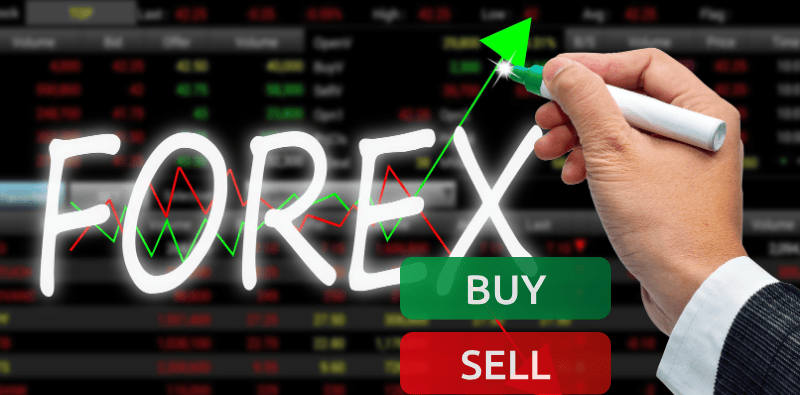
Forex trading is the act of buying one currency and selling another at the same time in order to make money from changes in exchange rates. The foreign exchange market, or Forex or FX, is where it happens. It is the biggest and most liquid financial market in the world.
So, what is forex trading in plain English? Think about how you would feel if you thought the euro would go up against the US dollar. You would buy the pair EUR/USD. You can sell the euro later for a higher price and make money if it goes up. You could lose money if the value goes down.
As an example:
- If you think that the Euro (EUR) will be stronger against the US Dollar (USD), you will buy EUR/USD.
- If the price of EUR increases, you will make a profit.
- If the price falls, you will suffer a loss.
The forex market is open 24 hours a day (Monday to Friday) because markets in different countries operate in different time zones.
2. How does the Forex market work?
To truly understand what is Forex trading , it’s important to know how the Forex market actually works. Unlike stock markets that operate through centralized exchanges like the NYSE or NSE, the Forex market is an OTC (over-the-counter) market. This means trades are conducted directly between buyers and sellers, usually through brokers or financial institutions, without any centralized location.
Forex Market 3 Main Sessions:
- Tokyo Session (Asian Market)—From 5:30 AM to 2:30 PM IST
- London Session (European Market)—From 12:30 PM to 9:30 PM IST
- New York Session (American Market)—From 7:00 PM to 4:00 AM IST
Most movement occurs in the overlap of the London and New York sessions (7 PM to 12 AM IST).
3. Currency Pairs and Their Types
In forex trading, currency is traded in pairs. There are three main types of currency pairs:
1. Major Currency Pairs
- EUR/USD (Euro vs US Dollar)
- USD/JPY (US Dollar vs Japanese Yen)
- GBP/USD (British Pound vs US Dollar)
2. Minor Currency Pairs (Cross Pairs)
- EUR/GBP (Euro vs British Pound)
- AUD/CAD (Australian Dollar vs Canadian Dollar)
3. Exotic Currency Pairs
- USD/INR (US Dollar vs Indian Rupee)
- EUR/TRY (Euro vs Turkish Lira)
4. Who is involved in Forex trading?
- Central Banks (RBI, US Federal Reserve)—Currency prices are controlled.
- Commercial Banks (HDFC, ICICI, JP Morgan)—Trade in large volumes.
- Large Investors and Hedge Funds – Trading on a large scale.
- Retail Traders—People like us trading through brokers.
5. Advantages of Forex Trading
- The 24/5 market—you can also trade at night.
- High Liquidity—You can buy at any time.
- Start with less money—you can start trading with $100.
- Benefit of Leverage—You can get big profits from small investments.
- No Monopoly—Anyone can be a successful trader.
6. Risk in Forex Trading
- High-risk—Damage from leverage is also rapid.
- Market Fluctuations—There is a sudden movement from news events.
- Fraud Brokers—It is important to avoid fake brokers.
7. How to Start Forex Trading (Step-by-step guide to 2025)
- If you’re new and wondering what is Forex trading and how to begin, the first step is to learn the basics. Start by exploring free resources on platforms like YouTube, reading beginner-friendly books, and enrolling in online courses that explain how currency markets work, including terms like pips, lots, leverage, and spreads.
- Once you have a basic understanding of what is Forex trading , the next step is to practice risk-free. Most brokers offer a demo account where you can trade with virtual money using real-time market data. Platforms like MetaTrader 4 (MT4) or MetaTrader 5 (MT5) are perfect for beginners to get hands-on experience with placing trades and analyzing charts.
- IC Markets
- Pepperstone
- XM Forex
- Start with small capital—start trading with $100–$500.
- Start with a simple strategy like
- Moving Average
- Support-Resistance
8. Best Forex Trading Strategies for Beginners (2025)
- Price Action Trading—Understand the candlestick patterns.
- Use the Moving Average Strategy—50EMA and 200 EMA—to identify the trend.
- Breakout Trading – Trade on the breakout of strong support/resistance levels.
9. Technical vs Fundamental Analysis
| Technical Analysis | Fundamental Analysis |
|---|---|
| Uses Charts and Indicators | Analyzes Economic News and Data |
| Best for Short-Term Traders | Useful for Long-Term Investors |
10. Common Mistakes and How to Avoid Them
- Take more trades—trading without thinking can lead to losses.
- Emotional trading—Don’t trade out of greed or fear.
- Don’t stop losing—risk management is important.
11. Tips to Become a Successful Trader
- Risk Management – Do not risk more than 1-2% in a single trade.
- Create a Trading Journal—Record your trades.
- Be Patient—Consistency is essential to success.
12. Best Forex Trading Platforms and Tools (2025)
- MetaTrader 4 (MT4)—The most popular platform.
- MetaTrader 5 (MT5)—with advanced features.
- cTrader—For professional traders.
Conclusion:
Forex trading is not just about buying and selling currencies—it’s about understanding the market, developing strategies, managing risks, and growing as a disciplined trader. With over $7.5 trillion traded daily, the Forex market offers massive potential, but success doesn’t come overnight.
For beginners in 2025, the path to becoming a profitable trader starts with solid education, consistent practice, and controlled risk management. Avoid shortcuts, stay away from emotional trading, and always trade with a plan. read full article what is forex trading?
Read Also: How to be Disciplined in Forex Trading
What is a Pip in Forex Trading? Complete Guide for Beginners
Disclaimer:
Forex trading carries risk. The content in this guide is meant to help you learn but should not be taken as financial advice. Please do your own research before investing. Only trade with money you can afford to lose. Profits are possible, but so are losses—so trade smart and stay careful.
Frequently Asked Questions (FAQ):
1. Can I start Forex trading with just ₹1000 or $10?
Yes, many brokers allow you to start trading with as little as $10 (around ₹800–₹1000). However, it’s always recommended to start with a demo account and practice before using real money.
2. How many hours is the Forex market open each day?
The Forex market is open 24 hours a day, 5 days a week—from Monday to Friday. It runs across three major sessions: Tokyo, London, and New York.
3. When does the Forex market have the highest movement?
The highest volatility usually occurs during the London and New York session overlap, which is between 7:00 PM and 12:00 AM IST.
4. Which platform is best for beginners to start Forex trading?
MetaTrader 4 (MT4) and MetaTrader 5 (MT5) are the most popular and beginner-friendly platforms. cTrader is also a great option for advanced traders.
5. Is Forex trading legal in India?
Forex trading is only legal through Indian exchanges (like NSE) using currency pairs approved by RBI (such as USD/INR and EUR/INR).
Trading with international brokers is technically outside RBI regulations and comes with risk—proceed with caution.
6. What does leverage mean in Forex trading?
Leverage allows you to control a large trade with a small amount of capital.
For example, with 1:100 leverage, you can trade $10,000 with just $100. However, while it increases potential profit, it also increases risk.
7. Who controls the Forex market?
The market is influenced by central banks (like RBI and Fed), commercial banks, hedge funds, and millions of retail traders.
Central banks play a major role in currency value through interest rates and monetary policy.
8. What is the most common strategy used in Forex trading?
Popular beginner strategies include:
- Moving Average Crossover
- Price Action Trading
- Support and Resistance Breakout
These are simple yet effective for learning and gaining confidence.
9. Can Forex trading become a full-time income source?
Yes, but it takes time, discipline, and consistent learning.
Don’t expect profits overnight. Many traders start part-time and grow into full-time trading once they’re experienced and profitable.
10. What are the most common mistakes in Forex trading?
- Overtrading
- Emotional decisions (fear/greed)
- Not using stop-loss
- Ignoring risk management
Avoid these mistakes by following a proper trading plan and strategy.
11. Do I need a course to learn Forex trading?
Not necessarily. You can start with free YouTube videos, blogs, and demo accounts. But if you’re serious, paid courses or mentorship programs can fast-track your learning and confidence. If you do not know what Forex trading is, Then read this article from beginning to end.
12. What is the difference between technical and fundamental analysis?
| Technical Analysis | Fundamental Analysis |
|---|---|
| Based on charts and indicators | Based on economic news and data |
| Best for short-term traders | Best for long-term investors |
| Focuses on price action | Focuses on economic trends |