


Top Forex indicators are among the most important tools for every trader. They help in understanding how prices move, what the market trend is, and where possible entry or exit points may come. Without these indicators, Forex trading can feel like driving without a GPS -you may move forward, but without clear direction.
There are a lot of indicators in the Forex market, but not all of them are helpful. Some are better for short-term trading, like scalping or day trading, while others are better for looking at trends over a longer period of time.That is why traders often look for the best Forex indicators that can really help them make decisions.
We will talk about the most popular indicators in this article. These include the Moving Average, RSI, MACD, Bollinger Bands, and Fibonacci retracement. You will also learn how to use them correctly, when to use them, and how to combine different indicators to get more reliable trading signals.
Types of Forex Indicators
There are four main types of indicators in Forex trading. Different types of indicators give you different kinds of information about the market. You can choose the best Forex indicators for your trading style by knowing these groups.
- Trend Indicators
- Momentum Indicators
- Volatility Indicators
- Volume Indicators
1.Trend Indicators
Finding the trend is one of the most important things to do before you make a trade in Forex. That’s why trend indicators are some of top Forex indicators. They help traders figure out if the market is going up, down, or sideways. Let’s take a look at the most popular ones.
1.1 Moving Average (MA)
The Moving Average is the most powerful trend indicator, even though it’s the simplest. It figures out the average price of a currency pair over a set amount of time, like 20 days, 50 days, or 200 days.
- When the price is higher than the moving average, it usually means that the trend is going up.
- A downtrend is when the price is below the moving average.
How traders use it:
- Short-term MAs, like the 10 or 20 period, are often used by day traders to catch quick moves.
- Long-term traders like to use 100 or 200 period MAs to confirm the bigger trend.
- The Moving Average Crossover is a common strategy. If the 50-day MA crosses above the 200-day MA, it gives a “golden cross” signal, which is good news.
2.Momentum Indicators
Trend indicators show the market’s direction, while momentum indicators show how strong or fast the price movement is. These tools help traders figure out if the current trend is strong enough to keep going or if it might change direction soon. That’s why momentum tools are also some of best top Forex indicators.
These are the ones that people use the most:
2.1 Relative Strength Index (RSI)
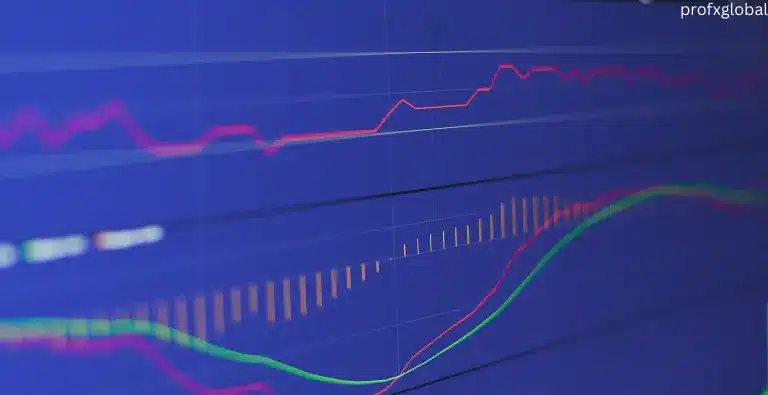
The Relative Strength Index (RSI) is a tool that shows whether the market is overbought or oversold. It goes up and down between 0 and 100, which helps traders see when the market might change direction. If the value is over 70, it means the market might go down. If the value is under 30, it means the price might go up.
- The values of RSI can be anywhere from 0 to 100.
- Many people think the market is overbought when the RSI goes above 70, which could be a good time to sell.
- People think the market is oversold (a chance to buy) when the RSI drops below 30.
How traders use it:
- To see when trends change.
- To confirm signals from other indicators, such as the Moving Average or MACD.
- RSI is a tool that many day traders use to get in and out of trades quickly.
2.2 Moving Average Convergence Divergence (MACD)
The MACD is a well-known tool that keeps track of both trend and momentum. It has a histogram and two lines: the MACD line and the Signal line. When the MACD line crosses above the Signal line, it means that the market is bullish. When it crosses below, it means that the market is bearish.
- A bullish signal is when the MACD line crosses above the Signal line.
- A bearish signal is when the MACD line goes below the Signal line.
How traders use it:
- To find out if a trend is strong.
- To see changes in momentum before the price moves.
- Often used with RSI to get more reliable entries.
3. Volatility Indicators
Volatility indicators tell you how much the price of something is changing over a certain amount of time. They help traders figure out if the market is calm or very busy. These tools are some of the best Forex indicators because they show where prices might break out or swing sharply. For a deeper explanation, you can check TradingView’s guide on volatility indicators.
3.1 Bollinger Bands
Bollinger Bands are one of the most popular indicators of volatility in Forex trading. There are three lines: a middle line (Moving Average) and two outer bands that get bigger or smaller depending on how volatile the market is.
- When the bands are close together (narrow), it usually means that the market is stable and that a breakout might happen soon.
- When the bands are far apart (wide), it means that the price is moving more quickly and is more volatile.
How to use it:
Traders use Bollinger Bands to find overbought and oversold situations, look for breakout opportunities, and even set goals for when to enter and exit trades.
4.Volume Indicators in Forex
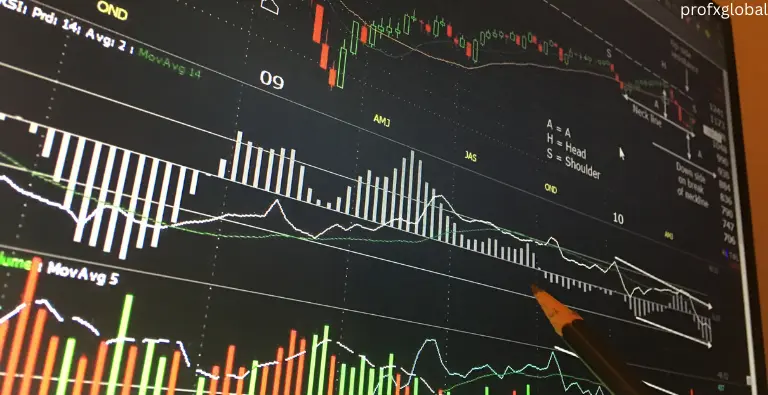
Volume indicators look at how much trading is going on to figure out how strong price changes are. In Forex, there isn’t a central exchange that keeps track of volume. Instead, brokers use tick volume, which is the number of price changes.
4.1 On-Balance Volume (OBV):
- Keeps an eye on buying and selling pressure.
- If OBV goes up with price, it means that buyers are strong.
- If the price goes up but the OBV goes down, the trend may change.
4.2 Money Flow Index (MFI):
- Adds together price and volume.
- It works like an RSI that takes volume into account.
- Over 80 means too many people have bought, and under 20 means too few people have sold.
5.Conclusion
Technical indicators are very useful in Forex trading, but they only work well when you know how to use them. There is no one indicator that can guarantee profits. Instead, traders should use a combination of trend, volatility, volume, and momentum indicators to get a clear picture of the market. For instance, combining the Moving Average for trend direction, the ATR for volatility, and the RSI for momentum gives stronger signals.
As a trader, you should always keep things simple. Indicators are not meant to confuse; they are meant to help you make decisions. You will learn which ones work best for your trading style with practice. These are the best top Forex indicators because they help traders make smarter and more confident decisions about when to trade.
Read also:Smart Money vs Retail Investors: Is Retail Becoming the New Smart Money? – Trends & Insights
Disclaimer
The information in this article is for educational purposes only and should not be considered as financial or investment advice. Forex trading involves high risk, and you can lose more than your initial investment. Always do your own research and consult with a licensed financial advisor before making trading decisions.