



Stepping into the world of trading is like taking a new path. If you move in the right direction, new doors of success can open, but taking steps without preparation can also face big losses. The purpose of this article is to give you the right guidance to succeed in the world of trading, so that you can embark on this journey with confidence and move towards financial independence through trading. We will tell you in this article how to start trading, its different methods, risk management, choosing the right brokers, psychology, and much more. So, let’s step into the world of trading with this detailed guide.
1. What’s the trade?
tading is the process in which you buy and sell financial instruments such as stocks, commodities, currencies, and cryptocurrencies. Its purpose is to profit from changes in price. Trading is usually short-term, while investing is done for the long term.
In investing you hold shares or other assets of a company for a long time, while in trading you buy and sell these assets in a short time. In trading you can change your position within hours, days, or months, whereas in investing the length of time is longer. Risks are also higher over time in trading, but good profits can also be made with the right strategies.
2. Types of Trading
There are different types of trading, some of the major types are as follows:
2.1 Share Trading
In stock trading, you buy and sell shares of a company. When a company’s stock price rises, you make a profit by selling it. If the price goes down, you lose money. This is the most common type of trading and most people adopt it as the primary one.
2.2 Forex Trading
Forex or foreign exchange trading is the process of taking advantage of exchange rate fluctuations between the currencies of two countries. For example, trading is done on a pair like USD/EUR or USD/INR. In this type of trading you buy and sell one currency against another currency.
2.3 Commodity Trading
In commodity trading, you trade physical commodities, such as gold, silver, crude oil, wheat, etc. You can earn profit due to fluctuations in the price of these items.
2.4 Cryptocurrency trading
Cryptocurrency trading is done in digital currencies, such as Bitcoin, Ethereum, Litecoin, etc. This sector is quite new, but has seen a huge growth in the last few years. Due to the sharp fluctuations in the value of these currencies, there can be both big gains and losses here.
2.5 Derivative trading
In derivative trading, you bet on changes in the value of assets through futures and options. In this, you trade on the future value of an asset, irrespective of its actual value at present.
3. Things You Need to Know to Start Trading
There are a few important things to keep in mind to be successful in trading:
3.1 Education and research
To get success in trading, it is necessary to first get in-depth information about it. You have to study various chart patterns, economic indicators, and economic news. Also, you have to understand how technical and fundamental analysis is used.
3.2 Set a goal
You need to clearly understand what your purpose is. Do you want to trade for short-term gains or plan to build long-term wealth? It is your purpose that will influence your strategies.
3.3 Risk tolerance
Trading involves risk, and you have to understand how much you are willing to risk. Evaluating your risk tolerance will make it easier for you to make decisions in the event of a loss.
3.4 Time management
You need to understand how much time you have to trade. Can you pay attention to the charts throughout the day, or will you use automated strategies?
3.5 Mental preparation
There are fluctuations during trading. So it’s important to be mentally prepared. You have to understand that sometimes you win and sometimes you lose. Without this mental state, you will not be able to make the right decision.
4. How to choose the right brokers
Your broking house is the foundation of your trading journey. Keep the following points in mind when choosing the right brokers:
4.1 Regulated
Your brokers should be appointed by accredited bodies such as SECP, FCA, ASIC or CySEC, so that you get protection.
4.2 Commissions and Fees
Do a comparative study of commissions and fees of brokers. Learn what fees are charged for the services of brokers, such as trading commissions, withdrawal fees, etc.
4.3 Trading platform
The platform of the brokers should be user-friendly. It should come with a mobile app and web trading features so you can trade from anywhere.
4.4 Customer service
The level of customer service should be good. Whenever there is a problem, you should get quick and effective help. Help should be available in Hindi, Urdu or English.
4.5 Educational Resources
Educational content such as tutorials, webinars, and blog posts should be provided by the brokers, so that you can continuously enhance your knowledge.
5. How to open a trading account and deposit money
To open a trading account and deposit money you need to take the following steps:
- Go to the official website of the brokers and click on “Open New Account.”
- Be sure to include your name, address, phone number, and email address.
- Upload the identity card (Aadhaar card or passport) and address proof (electricity bill).
- After you sign up, your account will be activated.
- Now you can transfer money from your bank account, use a credit/debit card, or deposit money through an e-wallet.
- Practice by opening a demo account as a beginner, so you’ll be ready for real trading.
6. Required tools and platforms
You can improve your trading with the help of various tools and platforms:
6.1 Charting software
You will need charting software such as TradingView and MetaTrader 4/5. These software will help you to analyze the market trends and indicators.
6.2 News and Economic Calendar
Websites like Forex Factory and Investing.com allow you to track the ongoing events in the market and the economic calendar, which influence your trading decisions.
6.3 Automation tools
Using Expert Advisors (EAs) and API trading tools you can automate your trading and save time.
6.4 Data analytics
Using tools such as Python and Pandas, you can analyze trading data, which helps you make better decisions.
6.5 Community and Forum
From forums like Reddit, Telegram Channel, and the TradingView community, you can learn from the experience of other traders and improve your strategies.
7. Technical analysis
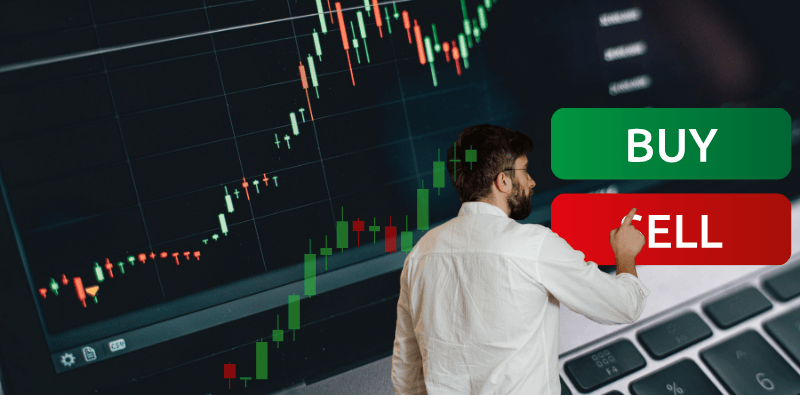
Technical analysis is an important tool, which predicts future price movements by studying the price data and volumes of the former. It uses key tools such as chart patterns, indicators, trend lines, and support-resistance. Using them correctly, you can make better trading decisions.
Conclusion:
Trading is a powerful way to build wealth, but it requires the right knowledge, discipline, and mental strength. Whether you’re interested in stock trading, forex, crypto, commodities, or derivatives, the key to success lies in preparation, risk management, and continuous learning. This guide has provided you with a foundational understanding of what trading is, the different types available, what you need to begin, how to choose brokers, and the tools required to support your trading journey.
Start small, learn from your mistakes, stay consistent with your strategy, and never stop educating yourself. Remember, trading is not a game of luck—it’s a skill built with patience and practice. With the right mindset and information, you can not only protect your capital but also grow it over time. So, take your first step confidently and enter the trading world with clarity, responsibility, and a plan.
Also Read:-
Disclaimer:
This article is only meant to teach and inform. There is risk involved in trading in financial markets, so it’s not for everyone. Before you make any decisions about investing or trading, always do your own research and talk to a certified financial advisor. The person who wrote this article and the company that published it are not responsible for any money that may be made or lost by using this information. You could lose your money—be smart and responsible when you trade.
FAQ:
1. What is the difference between trading and investing?
Trading focuses on short-term buying and selling of financial assets to make quick profits, while investing involves holding assets like stocks for the long term to build wealth gradually.
2. Can trading be a full-time career?
Yes, trading can become a full-time career, but it requires deep knowledge, risk management, emotional control, and financial discipline. Many traders start part-time before switching to full-time.
3. How much capital do I need to start trading?
You can start trading with as little as ₹500–₹1,000, but it’s ideal to begin with ₹10,000 or more for better strategy implementation and risk management.
4. Is trading safe?
Trading is safe when done through regulated brokers and with proper education. However, high returns also come with high risk. Avoid unregulated platforms to protect your funds.
5. Do I need technical knowledge to trade?
Yes, understanding basic technical analysis, indicators, and chart reading is very helpful. However, you can learn these gradually through courses, videos, and demo trading.
6. What is the best time to trade?
It depends on the market. For example, Indian stock markets operate from 9:15 AM to 3:30 PM IST. Forex runs 24 hours from Monday to Friday. Choose the time when the market is most active.
7. Which indicators are most useful for trading?
Some popular technical indicators include RSI (Relative Strength Index), Moving Averages, MACD, Bollinger Bands, and Fibonacci levels. These help identify trends and reversals.
8. Can I earn daily from trading?
Yes, but daily profits are not guaranteed. Consistent income requires experience, discipline, proper strategy, and risk control. Beginners may face losses initially, which is part of the learning curve.
9. Can I trade using a mobile phone?
Absolutely. Most brokers offer mobile apps that allow you to trade, analyze charts, and monitor your account from anywhere at any time.
10. Do I need a course to learn trading?
Not necessarily. Many free and paid resources like YouTube, blogs, and demo accounts can help you learn. However, a good course or mentor can speed up your learning process.
11. How can I reduce or control losses in trading?
Use stop-loss orders, limit your risk per trade (like 1–2% of capital), avoid emotional decisions, and always follow a well-tested trading plan to minimize losses.
12. Which type of trading is best for beginners?
Stock trading and demo forex trading are good starting points for beginners. Cryptocurrency and derivatives involve higher risk and are better suited for experienced traders.





“This article is incredibly well-written and informative. I learned a lot and truly appreciate the effort behind it. Looking forward to more such valuable content!”